Agentic AI for computational chemistry is an AI that plans a scientific task, picks the right tools, and runs them on real structures, then hands you the results. Nanome's MARA is one of these. It's an AI copilot inside Nanome's molecular visualization and drug discovery platform, and it orchestrates 300+ integrated scientific tools from plain-English requests, across the web app and XR headsets, behind your firewall.
Ask a language model about docking and you get prose. Ask MARA, and a docking job runs against your protein and your ligand, then the pose comes back in 3D.
What "agentic" means here
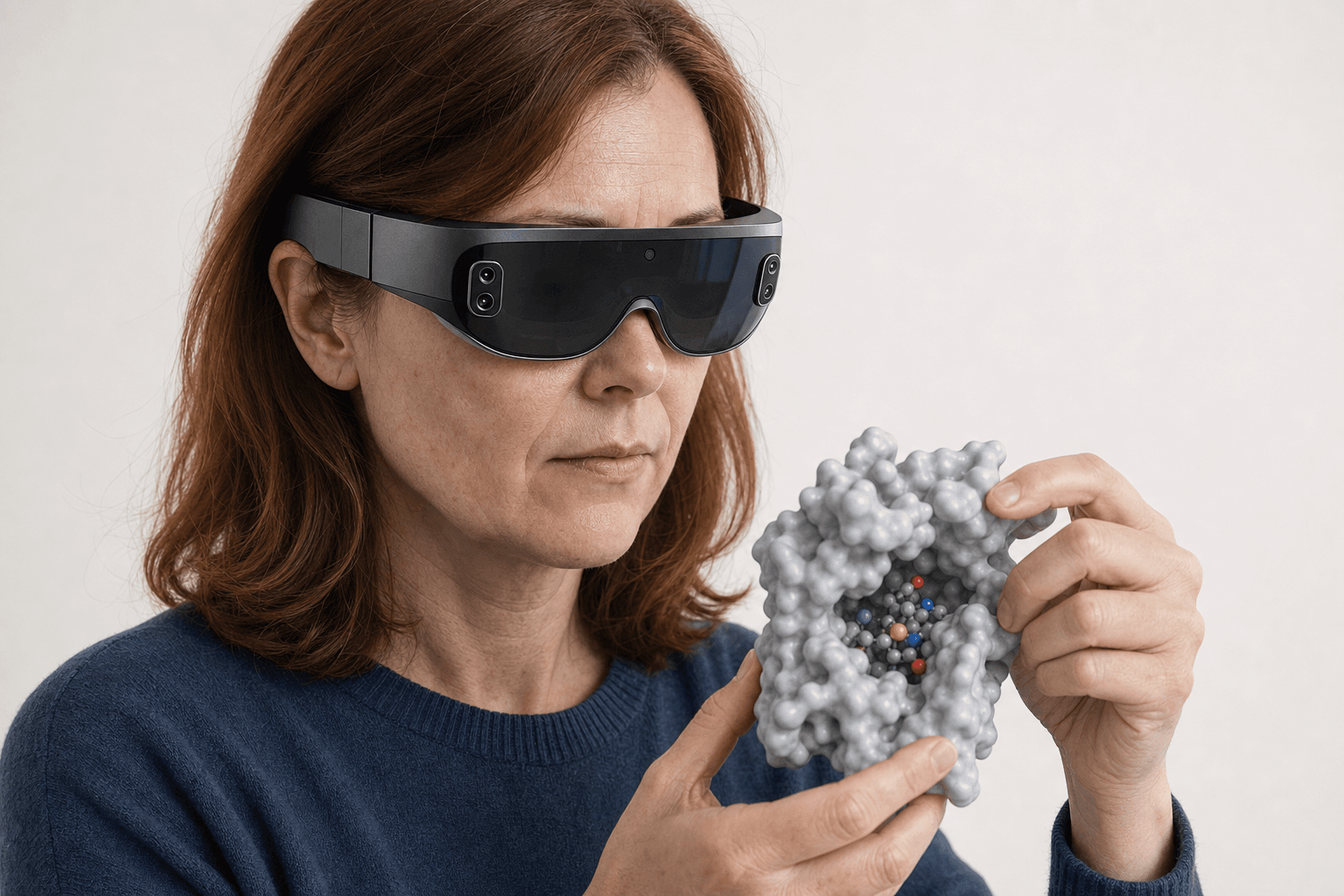 A researcher wearing an ultra-thin VR headset studies a solid protein surface model with a small ligand visible in its binding pocket held close to the chest
Two separable jobs sit behind any useful answer. Something has to decide what to run, and something has to run it. A language model handles the first well and has no way to do the second on its own.
Agentic AI wires the two together. You describe the goal ("dock this ligand into the ATP pocket", "design a binder for this epitope"), and MARA chooses which of the 300+ tools to call, in what order, with what inputs. It fires docking engines, folding models and electrostatics solvers along with the cheminformatics routines around them, then hands back structures you can turn over in 3D. The day-to-day shape of that job gets walked through in an AI copilot for drug discovery workflows.
Every step stays on the record. MARA names each tool it called, the inputs it passed, and what came back, so a finished dock arrives with its scoring function and its poses, and every line of the summary has a run behind it you can open.
What MARA can run
| Task | What the agent does | Example tools |
|---|---|---|
| Docking | Places a ligand in a pocket and scores the poses | Smina, DiffDock-L, Vina-style engines |
| Co-folding | Folds a protein and a ligand together to predict the bound complex | Boltz-2, AlphaFold 3, Protenix |
| De novo binder design | Generates backbones and sequences for a target pocket or epitope | RFdiffusion3 (beta), ProteinMPNN |
| Electrostatics | Solves and maps surface charge | APBS |
| ADMET | Estimates absorption, distribution, metabolism, excretion and toxicity | ADMET models, eToxPred |
| Antibody annotation | Numbers variable domains and defines CDR loops with ANARCI, then designs new sequences with ProteinMPNN | ANARCI, ProteinMPNN |
The built-in library spans 300+ tools across 26 categories, and a team's own code can join it. A script or a model a group already trusts becomes a MARA tool, and from then on anyone in the org calls it by asking for it in a sentence.
Two runs show the shape of this.
A single job. You load a protein from RCSB PDB and a ligand from PubChem, then ask for a dock. MARA finds the pockets, sets a box, runs the job, and returns ranked poses with scores. Nanome puts the top pose in front of you, in the web app or in a headset, at whatever size you want to look at it.
A chained job. You point at an epitope and ask for new binders. RFdiffusion3 generates backbones, ProteinMPNN designs sequences onto them, and the candidates go to a folding model to see which ones hold their shape. Three tools, one request, and every intermediate structure stays in the workspace.
Behind your firewall
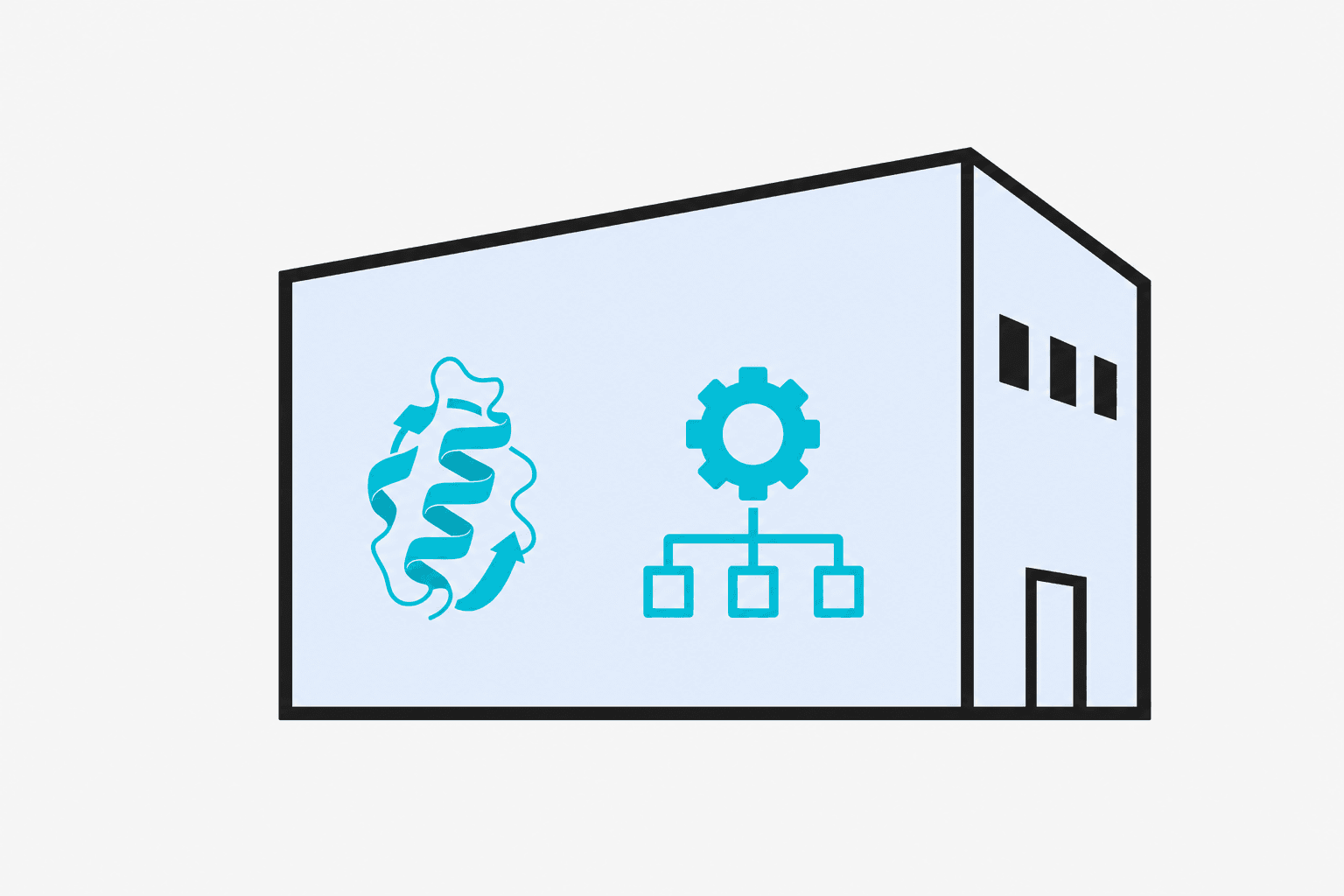 A flat vector diagram of a building outline containing a protein shape and a pipeline icon, illustrating that data and tool runs stay inside a secure network boundary.
Nanome enterprise deployments sit inside your own network, as a single tenant in the cloud or on hardware you run. Structures, prompts and tool outputs stay there. On an unpublished target that constraint decides whether an agent is usable at all, so the pipeline runs where the data already lives.
Nanome also ships MCP servers, a REST API and a Claude Code Skill, so the tool an analyst calls in a sentence can be called from a script too. That wiring has its own write-up in MCP servers for cheminformatics and drug discovery.
Where other tools fit

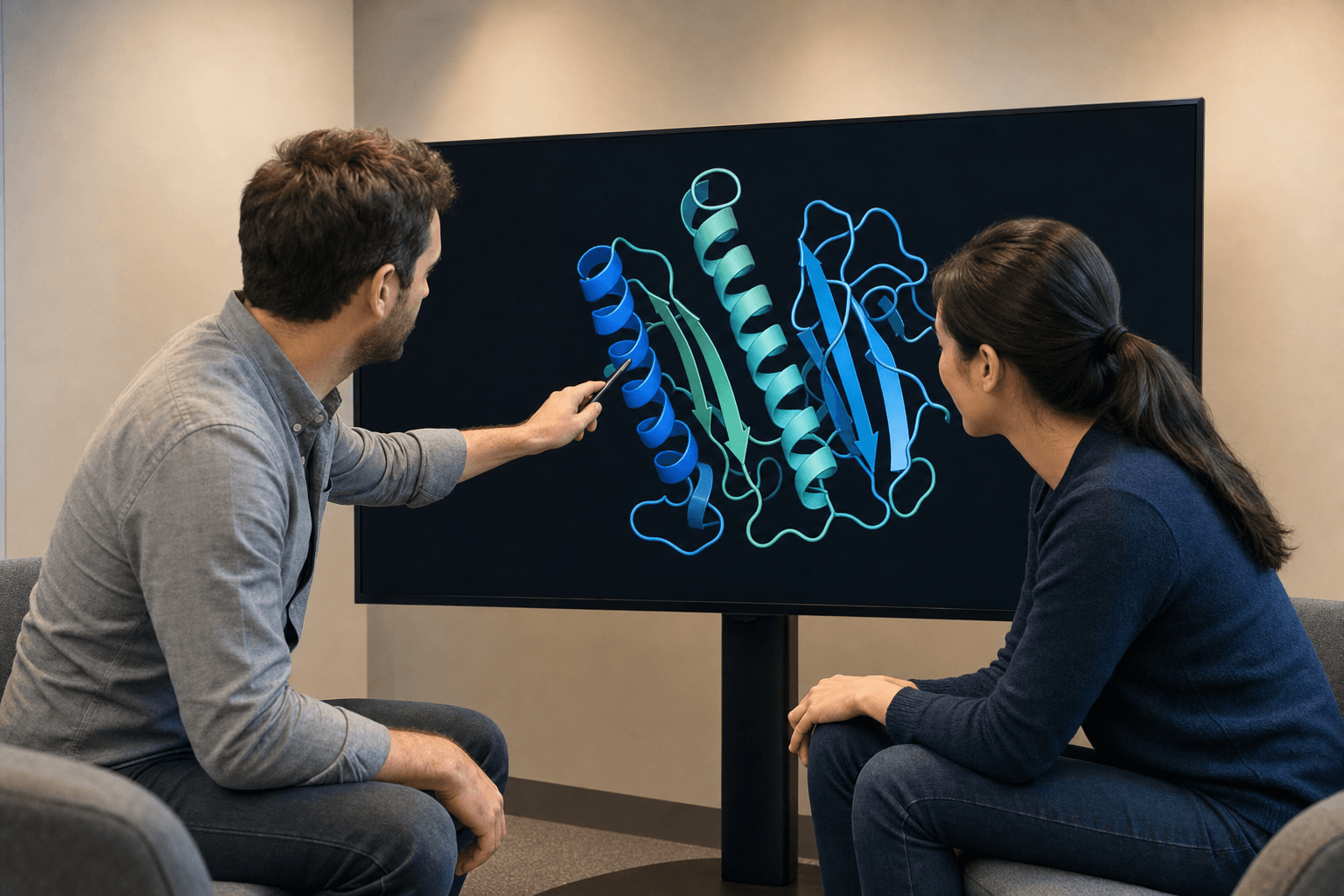 Two colleagues in a lounge area review a protein ribbon structure on a large display, one pointing at the fold with a stylus.
Nanome sits alongside the comp-chem suites a group already runs. Several of them are direct integrations.
| Tool | Strength | How Nanome connects |
|---|---|---|
| Schrödinger Maestro / LiveDesign | Physics-based modeling at depth, plus enterprise data | Nanome imports Maestro .mae / .maegz files (also the LiveDesign ingestion format) and integrates with LiveDesign. MARA adds plain-English orchestration on top, and the review happens in 3D. More on supported formats |
| PyMOL, ChimeraX, VMD | Scriptable desktop visualization | PyMOL .pse sessions import for viewing. PDB, mmCIF, SDF, MOL2, PQR and XYZ load as structures you can edit. Molecules come back out as PDB, SDF or SMILES, one frame at a time. Multiplayer sessions and XR are the part Nanome adds. More on supported formats |
| CDD Vault | Registration and assay data management | Nanome connects to CDD Vault, so an agent run lands next to the assay record it belongs with |
The payoff lands on runs that cross several of those tools at once. Each step stays visible, and the people who have to agree on the result can look at it together in one 3D space.
At UC San Diego, Prof. Zoran Radić's group used Nanome across a compound library designed to treat nerve agent poisoning, working from X-ray structures through lead optimization, and published the work in the Journal of Biological Chemistry. Radić describes the loop this way: "we can form covalent conjugates, we can minimize, dock it and score it in real time."
What other groups have done with it is at nanome.ai/case-studies.
FAQ
What separates an agentic AI from a chemistry chatbot?
A chatbot returns a description of a method. MARA runs the method: it plans the task, picks tools from the 300+ in the library, executes them against your structures, and reports what each one did.
Can AI agents for drug discovery run real docking and folding?
Yes. Docking with Smina and DiffDock-L, co-folding with Boltz-2, AlphaFold 3 and Protenix, de novo binder design with RFdiffusion3 and ProteinMPNN, electrostatics with APBS, and ADMET estimates. Each run reports the inputs it took and the results it produced.
Where does my data go?
Nanome enterprise deployments run inside your own network, as a single tenant in the cloud or on hardware you own, so targets, prompts and results stay under your control.
Can I drive the agent from my own code?
Yes. MCP servers, a REST API and a Claude Code Skill put the same tools in reach of your scripts, so a step you automate once behaves the same whether a script calls it or somebody asks for it in plain English.